





Eye For Film >> Movies >> Grace (2025) Film Review



“What’s a plus one?” she asks as she makes up the invitations. It’s a reasonable question for a sheltered 28-year-old who might not have come across the phrase before, but the older women in the room make no attempt to answer, instead talking about her to one another, their voices low and disapproving.
Like many other women that age, Grace (Fiadhnait Canning) has a boyfriend. She’s been seeing Tommy (Luca Malocco Mulville) for some time, and they’re serious about one another. When she tells her college tutor that she hopes to settle down some day, to marry and have a family, it’s him she’s thinking of. But she faces barriers most people never have to think about, because she has Down syndrome.
In 2023, after eight years of wrangling, Ireland passed the Assisted Decision-Making (Capacity) Act, which is intended to give every adult autonomy in making their own life choices, even if they need support due to an intellectual disability. Culture, however, can be slow to change, and the individuals directly affected by this legislation often have no means of finding out about it. Anna Rodgers’ tender but forthright film explores some of the matters covered by the Act and illustrates its importance.
It’s driven by Canning, who defies stereotypes, bringing real emotional nuance to her role. Over the course of the film, we see Grace go from a meek, patient woman who pins her hopes on the sympathy of those around her, to a much more assertive individual who challenges their expectation, eliciting real empathy. Crucially, this isn’t a journey built upon a series of triumphs, but has much more to do with making mistakes and learning and growing as a result – a human process rather than a Hollywood one. It suggests that when it comes to coping with the complexities of a semi-independent life, Grace is hampered more by her upbringing and lack of education than by anything innate.
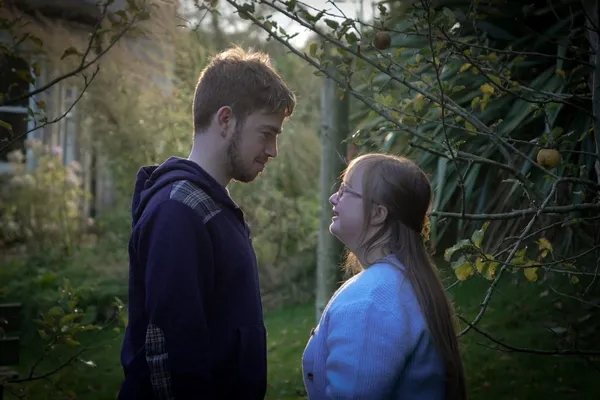
There are issues here which some viewers will find difficult, and the film may provoke strong reactions. Crucial to it is the understandingthat people like Grace may need lifelong support, but they are not children – they’re mature adults, with adult needs. Rodgers gets this across largely be using conventional cinematic languages in places where, historically, filmmakers have neglected to do so. When Grace and Tommy share a romantic moment in a garden, the camera never flinches, capturing the chemistry between them, showing the same respect for their feelings as for those of any young couple. We see staff members worry and doubt, even when they want to be supportive, but the camera itself never judges.
The course of love does not run smooth, and Grace’s experience of disappointment add to her awareness of herself as an individual who has the right to be assessed on an individual basis. Though she might struggle in other areas, her strength of will demands respect, even admiration, in keeping with the long history of cinematic rebels. The film leaves many questions unanswered and does not pretend that her journey forwards will be an easy one, but it is a bold effort to give voice to the 153 million people, worldwide, who, by dint of their reduced intellectual capacity, are all too often written off as not fully human.
Reviewed on: 11 Apr 2026


